February Highlights (+ Invite to 2/24 Museum of Science Event in Boston!)
Museum of Science event in Boston, feature in The New York Times Upfront, $1,000 Future Leader in Algorithmic Justice Scholarship, our revitalized movement against techno-authoritarianism, and more!

We’re heading to Boston for an event at the Museum of Science on February 24!
We’re bringing our work to the Museum of Science for a special one-night-only conversation! Featuring Sneha Revanur (Founder/President), Alexandra Raphling (Chief of Staff/Editor-in-Chief), Damilola Awofisayo (Director of External Affairs), Raksha Govind (U.S. Chapter Network Lead), Sumanth Ratna (Co-Director of Research), and Vidya Bharadwaj (Co-Director of Education).
This event is a hybrid offering. Tickets for the in-person/on-site event are available at a limited capacity. Register here. For those unable to join us on-site, a portion of this event will also be available to view at home via livestream, with a digital ticket reservation.
Encode Justice will partner with the Museum of Science to convene a youth-focused AI Concern Gathering and facilitate conversations exploring six core issue areas: media/democracy, criminal justice, education, healthcare, climate change, and national security/warfare. Register here.
Read about our work in the February 2021 edition of The New York Times Upfront!
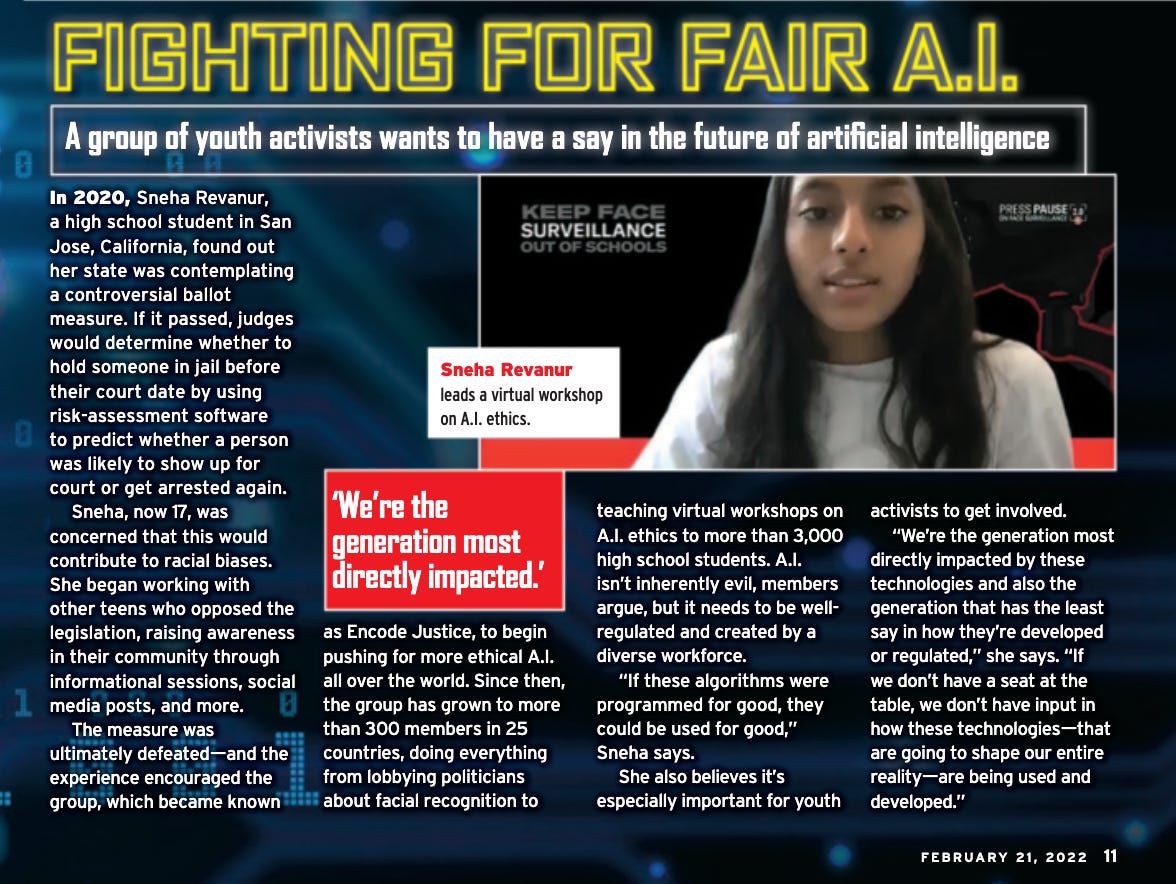
The New York Times Upfront, a newsmagazine for high school students published by the Times in partnership with Scholastic, Inc., recently profiled our work.
We’re accepting applications for our $1,000 Future Leader in Algorithmic Justice Scholarship until March 1!
As youth convinced of the importance of passing the torch to the next generation of leaders in AI ethics, we’re always looking for ways to empower our peers and accelerate their journeys in the field. Earlier this month, we opened applications for a $1,000 grant that can be used to cover educational expenses or to fund a personal project relating to the focus of Encode Justice. We’re hoping to support young visionaries who will go on to shape the future of tech governance. High school juniors and seniors who currently reside in the U.S.—members and non-members alike—are invited to apply.
We’re launching an international affairs division to supercharge our global movement against techno-authoritarianism!

Artificial intelligence is now another arrow in the authoritarian’s quiver. Technologies like facial recognition have helped surveil anti-junta forces in Myanmar, intimidate Kremlin critics in Russia, and target Uighur Muslims in China. To aid chapters abroad in their advocacy efforts, we’re launching an international affairs division!
The division will be headed up by our Co-Director of Advocacy, Adrian Klaits, who is based in Dar es Salaam, Tanzania. We’ll actively work to defeat techno-authoritarianism in all its forms and ensure that conversations about AI development are inclusive of communities in the developing world. We also plan to tackle challenges like broadband inaccessibility and data colonialism.
Stay tuned as Encode Justice continues to expand its international chapter network, which already includes local organizing hubs in Egypt, Bolivia, New Zealand, South Korea, India, Canada, and more!
We’re expanding our educational offerings to new and diverse audiences!
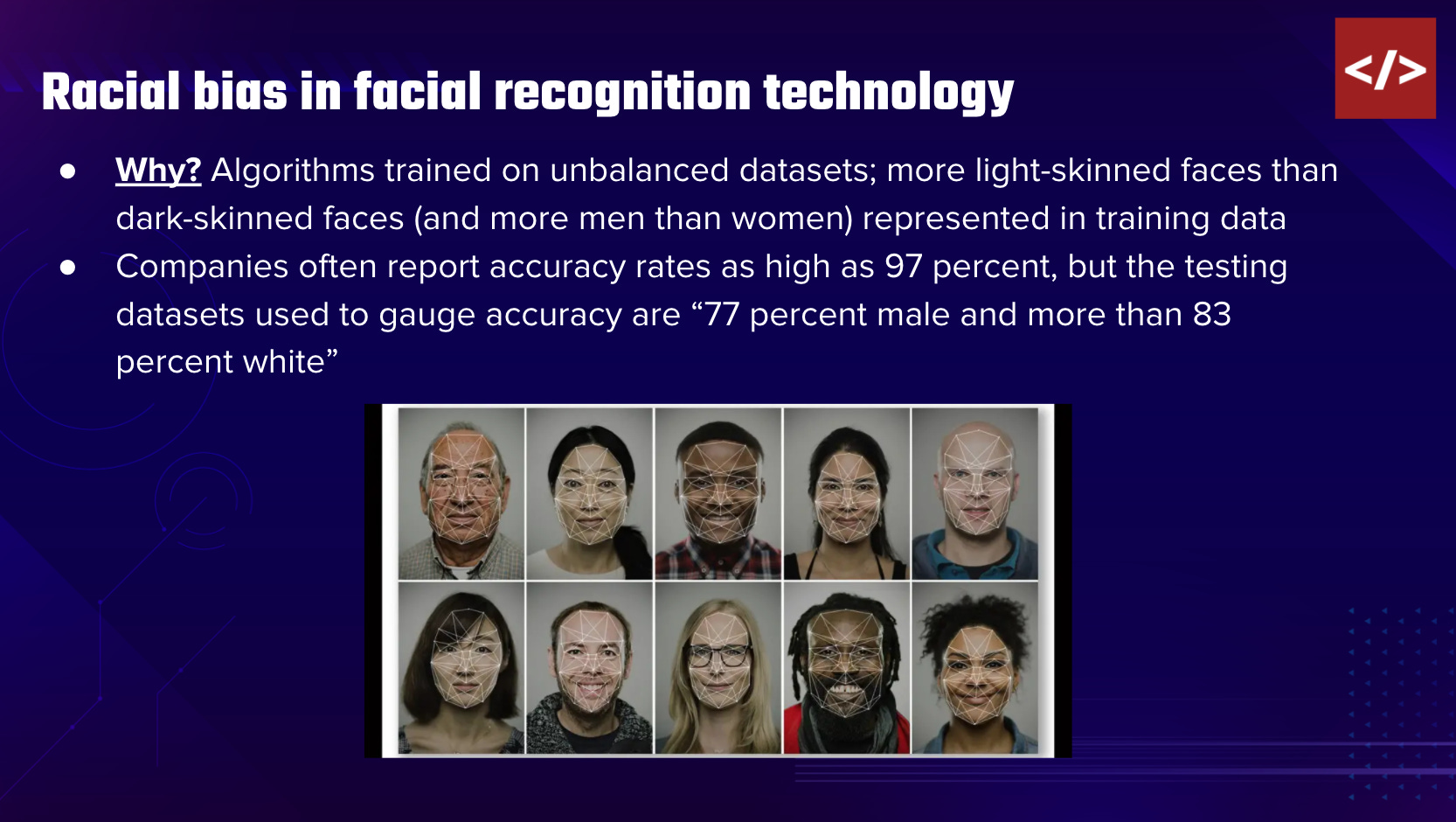
Since its inception, our flagship AI ethics workshop program has reached 5,000+ high school students worldwide. Participants are exposed to the whole gamut of AI ethics and are trained to think critically about the social, political, and environmental implications of algorithmic decision-making. Our lesson plans wrestle with topics like the use of lethal autonomous weapons in warfare and the potential of deepfakes to power large-scale disinformation campaigns. What distinguishes our educational offerings, you might ask? The messengers are youth themselves.
This week, we wrapped up a series of workshops as part of a Black History Month program at Brooklyn Technical High School in New York City. Now, we’ll be piloting a junior fellowship program in partnership with two middle schools in Georgia. Over the course of a six- to eight-week timeline, younger students will engage in disruptive conversations that explore themes like innovation and justice—along the way, they’ll prepare for an end-of-program symposium, where they’ll present personal research projects on a AI policy topic of their choice. Upon graduation from the program, they’ll be inducted into the Encode Justice family as its youngest members!
Other exciting events and updates …
On February 16, Sneha, our founder and president, was invited to present at a webinar titled “The Youth Voice and Equitable Change in California’s Education System”, hosted by the California Department of Education. We were honored to be able to share our work to combat the rise of surveillance technology on high school campuses with educational leaders statewide.
On March 8, Natalyah, our Co-Director of Education, will speak at a roundtable discussing youth civic engagement, hosted by the Greater Good Initiative.
On March 8, Sneha, our founder and president, will speak at a town hall discussing AI literacy and civil rights, hosted by a local branch of the NAACP in partnership with California State Senator Connie Levya.
Our latest Medium articles
The Weird, Weird World of Building the “Virtual Wall” — Written by Jia Michel, advocacy fellow from New York, New York.
The Shocking Carbon Footprint of AI Models — Written by Mira Bhakta, education fellow from Milpitas, California.
HIIDE in Plain Sight: The Biometric Technology Left Behind in Afghanistan— Written by Kristen Crawford, Co-Director of Outreach and Recruitment from San Antonio, Texas.
Chapter spotlight
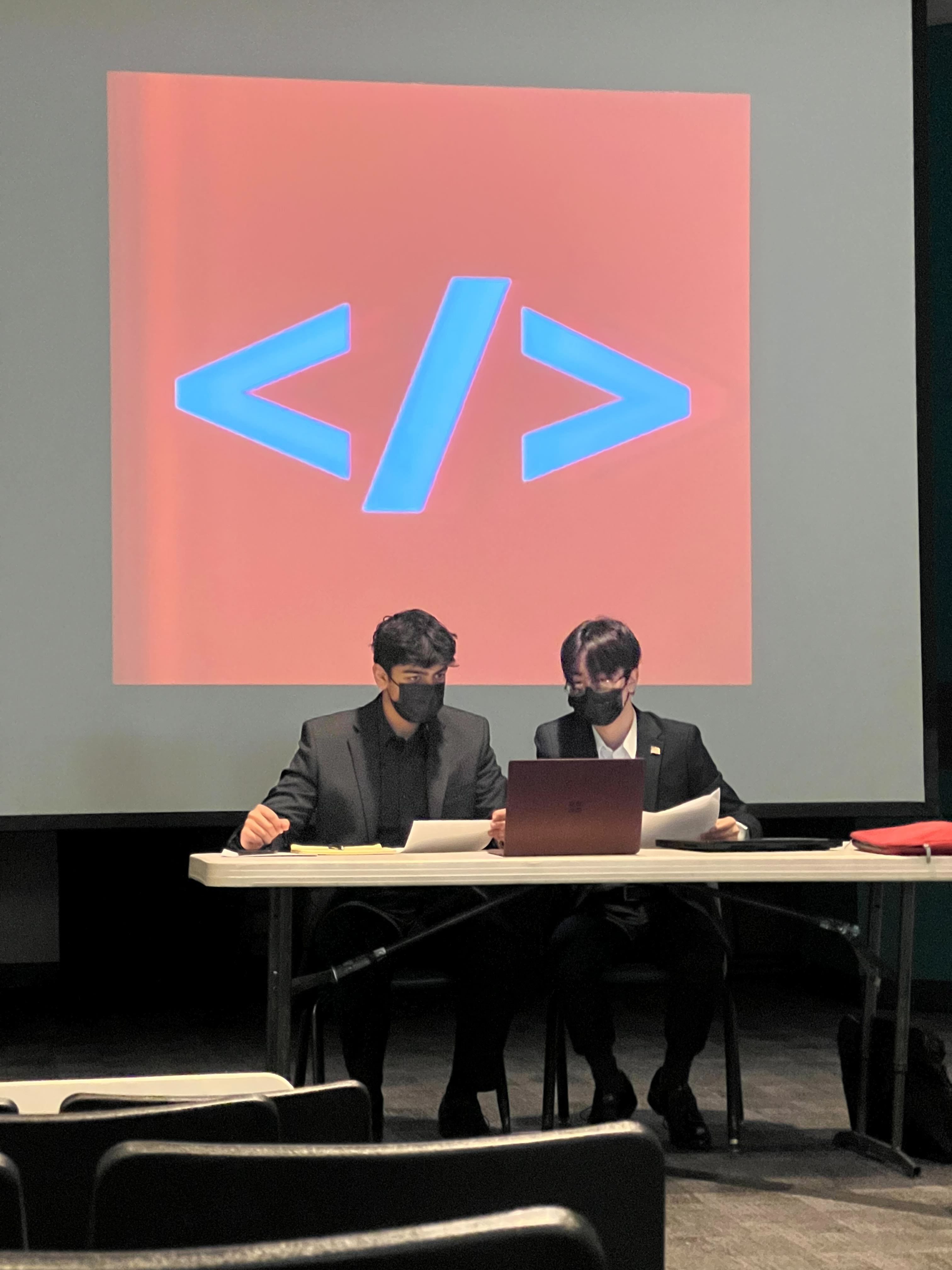
This week, Yee and Aryan from the Nevada chapter lobbied Congresswoman Dina Titus (D-NV) in favor of the Algorithmic Justice and Online Platform Transparency Act, citing discrimination in ad delivery programs, voter suppression, disinformation, hate speech, online extremism, and more.
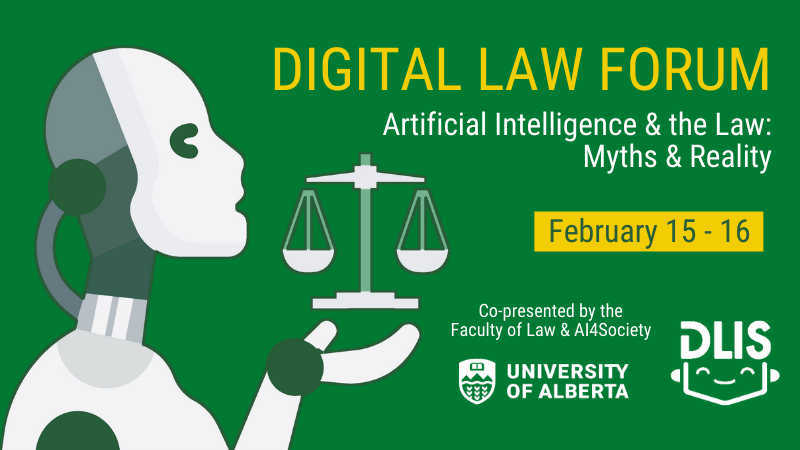
Our Canada chapter director, Sara Parker, presented at the University of Alberta’s 2022 Digital Law Forum, which took place from February 15-16! The forum “convened law, technology, and governance reform experts for an interdisciplinary look at legal liability, regulation, and the reform of public institutions in a digital age.”